
Living with ASMD disease
Each person’s experience living with acid sphingomyelinase deficiency (ASMD) is unique, and it is completely natural to have feelings of frustration, isolation, and sadness along the way. ASMD can not only cause physical symptoms, but living with the condition may also impact mental and emotional wellbeing.1,2
Learning more about living with a chronic illness can help you feel less overwhelmed and more empowered, and can help you take control of your own healthcare journey.3

What are the signs and symptoms of ASMD?
Recognizing symptoms of ASMD and understanding how they may appear or change over time can help you keep track of your child’s condition or your own. Being accustomed to your symptoms can also help you work with your care team to manage your condition more effectively.
ASMD can impact multiple organs and body systems
ASMD can affect many different organs and body systems (groups of organs that work together to perform specific functions). Each person’s experience living with ASMD may differ, but the most common symptoms* affect the lungs, spleen, liver, blood, and digestive system.2,4,5
- Coughing and difficulty breathing due to interstitial lung disease (inflammation and scarring of lungs) and infections such as pneumonia
- Chronic fatigue (tiredness that does not improve over time due to interstitial lung disease)
- High blood pressure that affects the lungs and heart (pulmonary hypertension)
- Bulging abdomen and abdominal pressure due to enlarged liver (hepatomegaly) and/or spleen (splenomegaly)
- Scarring of the liver (known as fibrosis, which can worsen and lead to further complications)
- Increased liver enzymes due to liver dysfunction
- Abnormal cholesterol levels (known as dyslipidemia)
- Fatigue due to decrease in red blood cells (known as anemia)
- Easy bruising and bleeding due to decreased blood platelets (known as thrombocytopenia)
- Abdominal pain and discomfort
- Diarrhea
- Back, limb, and/or joint pain
- Frequent bone fractures (due to weakening of bones, known as osteopenia and osteoporosis)
- Growth delay in children
- Decreased muscle tone (known as hypotonia)
- Impaired balance and coordination (known as ataxia)
- Developmental delays in children
- Tingling in hands and feet (due to nerve damage, known as peripheral neuropathy)
- Eyes: red spots on retinas (known as cherry red maculae)
- Heart: cardiac disease, damage to heart blood vessels (coronary artery disease), or heart problems from an early age
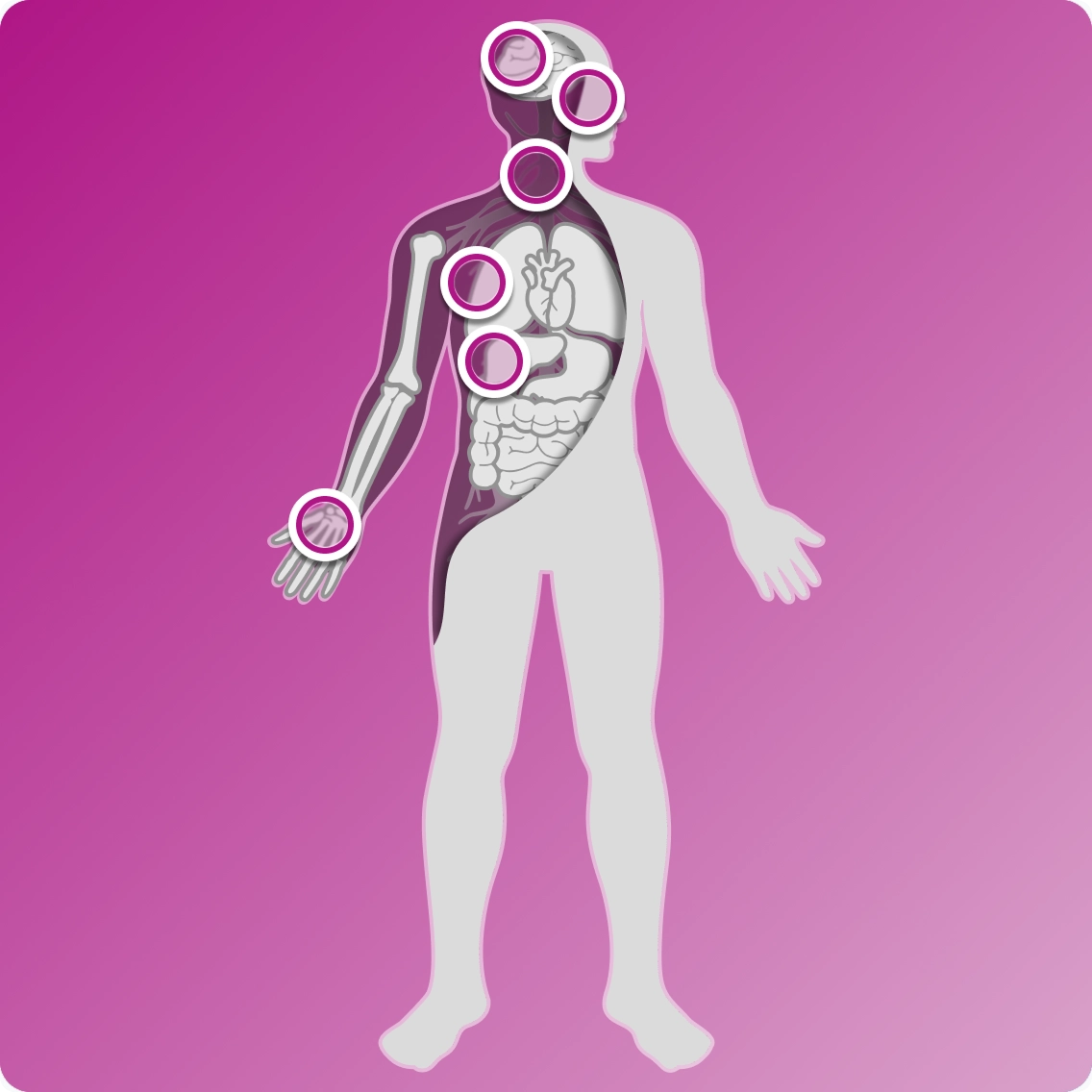
*These are not all possible symptoms, nor do all people living with ASMD have all the listed symptoms.
Symptoms of ASMD may overlap with other conditions
Many symptoms of ASMD mimic other conditions as well—such as blood cancers and diseases of the heart and lungs. Certain ASMD symptoms also overlap with Gaucher disease, another rare, genetic condition that can worsen over time.4,6
Because of this symptom overlap, it is common for an ASMD diagnosis to be delayed, or for people with ASMD to receive the wrong diagnosis at first. Your doctor may want to test for other conditions as well to ensure that you receive an accurate diagnosis.4
ASMD symptoms can impact your daily activities
The physical and emotional toll of ASMD may affect individuals differently. Over time, symptoms can impact mental and social wellbeing, along with physical health.7
Some people may experience:
- More frequent trips to the hospital due to worsening symptoms8
- The need for more medications to help control symptoms and use of medical devices to assist with performing day-to-day activities6
- Fatigue and reduced physical activity2
- Difficulty maintaining social relationships and work or school-related activities2
- Feelings of sadness, loneliness, and frustration7

How is ASMD managed?
Being proactive with your symptom management may help you feel more in control over your health. Your healthcare team will be your primary resource for information about managing your ASMD symptoms.
Multidisciplinary care team for ASMD
You may see multiple specialists to help treat and manage different symptoms. Your primary care physician may coordinate with your healthcare team to ensure you receive complete care that meets your needs.6
If you are the parent of a child with ASMD, your child's pediatrician will work with you and your child's healthcare team to coordinate care.6
Your ASMD healthcare team may include:
- Metabolic disease specialist (specializes in conditions involving the body’s metabolism)
- Geneticist (genetic condition specialist)
- Pulmonologist (lung disorder specialist)
- Hepatologist (liver disorder specialist)
- Gastroenterologist (digestive system specialist)
- Neurologist (brain and nervous system specialist)
- Hematologist (blood disorder specialist)
CareConnect Patient Education Liaisons can talk with you and your family about the different roles that specialists on your care team may play. Your primary care physician is the best resource to help determine who from your care team you need to see and when.6

Monitoring your ASMD
Keeping track of your own experience with ASMD can help your healthcare team provide you with the best care possible. Below are some tips on how to work with your healthcare providers to create your personalized management plan.
Create a weekly journal of your symptoms (or your child’s)
- Note how symptoms change over time, how they affect daily life at home and at work, and time spent with friends and family
Share your notes and discuss with your healthcare team
- Note the ways ASMD impacts your daily life and how you cope with your symptoms or your child's
Attend your regularly scheduled appointments with your healthcare team
- Keeping up with appointments will help your doctors monitor for symptom progression and determine if your symptoms are being appropriately managed
Stick with your symptom management plan as outlined by your healthcare team
- Contact your doctors if you have any questions or concerns
The importance of proper ASMD managementEarlier diagnosis and proper management are associated with improved outcomes in ASMD.2 It’s important to remember that continued, open communication with your healthcare team is key to managing ASMD. |
Support and resources for people with ASMD
Having a chronic condition can sometimes feel overwhelming and isolating. Resources are available to help support the well-being of people affected by ASMD and those close to them. There are also patient advocacy groups, ASMD foundations, and education websites that work to support people living with ASMD, their families, and their caregivers.7 Visit their websites to learn more about them and the services they offer.
This listing is provided for reference only and does not constitute an endorsement by Sanofi of any particular organization or its programming. All other trademarks are the property of their respective owners. Additional resources may be available and should be investigated. Sanofi does not review or control the content of non-Sanofi websites.

National Niemann Pick Disease Foundation (NNPDF)
A non-profit organization dedicated to patient advocacy and family support, empowering those affected by ASMD, also known as Niemann-Pick disease, through education, research, and collaboration.

National Organization for Rare Disorders (NORD)
A non-profit patient advocacy organization fighting to improve the lives of people with rare disorders working at the intersection of care, research, policy, and community for all rare conditions.
Visit NORD website
What is it like living with ASMD?

Video: Hear Jack’s story about how he balances life as a kid with ASMD.
More information about living with ASMD
If you or someone close to you is living with ASMD and you’re looking for more information about resources or support, our CareConnect team is available to speak with you Monday through Friday, 8AM-6PM EST.
Call 1-800-745-4447 (for English, press 3; para español, oprima 7) or email info@CareConnectPSS.com.

References
1 Henderson SL, Packman W, Packman S. Psychosocial aspects of patients with Niemann-Pick disease, type B. Am J Med Genet A. Nov 2009;149A(11):2430-6. doi:10.1002/ajmg.a.33077
2 McGovern MM, Avetisyan R, Sanson BJ, Lidove O. Disease manifestations and burden of illness in patients with acid sphingomyelinase deficiency (ASMD). Orphanet J Rare Dis. Feb 23 2017;12(1):41. doi:10.1186/s13023-017-0572-x
3 Stepanian N, Larsen MH, Mendelsohn JB, Mariussen KL, Heggdal K. Empowerment interventions designed for persons living with chronic disease - a systematic review and meta-analysis of the components and efficacy of format on patient-reported outcomes. BMC Health Serv Res. Aug 25 2023;23(1):911. doi:10.1186/s12913-023-09895-6
4 McGovern MM, Dionisi-Vici C, Giugliani R, et al. Consensus recommendation for a diagnostic guideline for acid sphingomyelinase deficiency. Genet Med. Sep 2017;19(9):967-974. doi:10.1038/gim.2017.7
5 Bajwa H, Azhar W. Niemann-Pick Disease. StatPearls. 2025.
6 Geberhiwot T, Wasserstein M, Wanninayake S, et al. Consensus clinical management guidelines for acid sphingomyelinase deficiency (Niemann-Pick disease types A, B and A/B). Orphanet J Rare Dis. Apr 17 2023;18(1):85. doi:10.1186/s13023-023-02686-6
7 Doerr A, Farooq M, Faulkner C, et al. Diagnostic odyssey for patients with acid sphingomyelinase deficiency (ASMD): Exploring the potential indicators of diagnosis using quantitative and qualitative data. Mol Genet Metab Rep. Mar 2024;38:101052. doi:10.1016/j.ymgmr.2024.101052
8 Pulikottil-Jacob R, Ganz ML, Fournier M, Petruski-Ivleva N. Healthcare Service Use Patterns Among Patients with Acid Sphingomyelinase Deficiency Type B: A Retrospective US Claims Analysis. Adv Ther. May 2023;40(5):2234-2248. doi:10.1007/s12325-023-02453-w
MAT-US-2602112-v1.0-03/2026