
Signs and symptoms of Fabry disease
Fabry disease (also known as Anderson-Fabry disease) is a rare genetic disease associated with a variety of symptoms.
Fabry disease is part of a group of genetic conditions known as lysosomal storage disorders. These disorders affect various organs in the body. Some individuals with Fabry disease show signs or symptoms of disease very early in childhood while others may remain asymptomatic (without showing signs or symptoms of Fabry) for some time.1,2
Fabry is a life-long, progressive disease. That means symptoms can get worse over time. It’s important to learn signs and symptoms of Fabry disease and track your symptoms over time.3
CareConnect offers a team of Patient Education Liaisons (PELs), who can help you understand Fabry symptoms through materials and in-person education at your request. Learn more about the services they can provide.
With Fabry disease, damage may be happening even without symptoms
With Fabry disease, there may be underlying damage happening long before someone experiences symptoms.1 Let’s review the disease process to understand what’s happening with Fabry disease.
What causes Fabry disease symptoms?
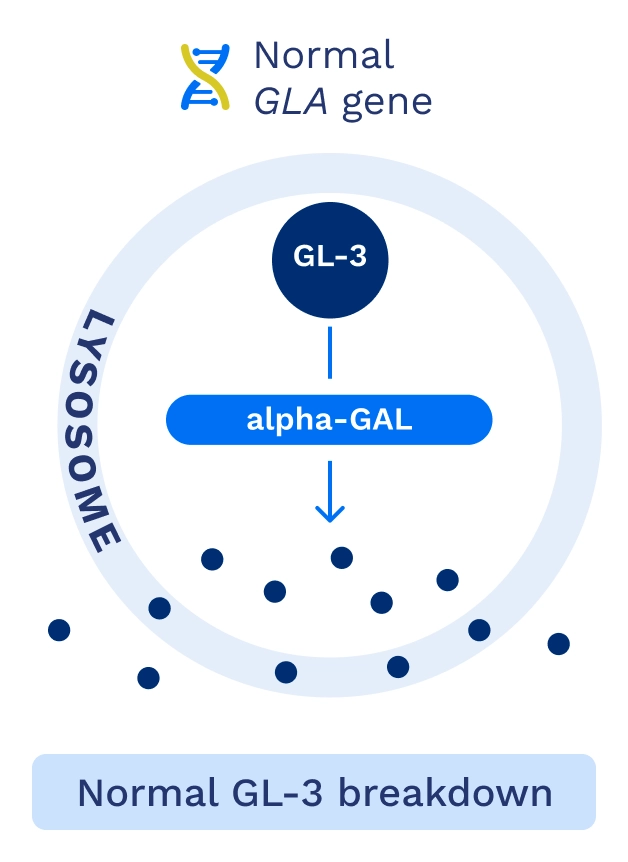
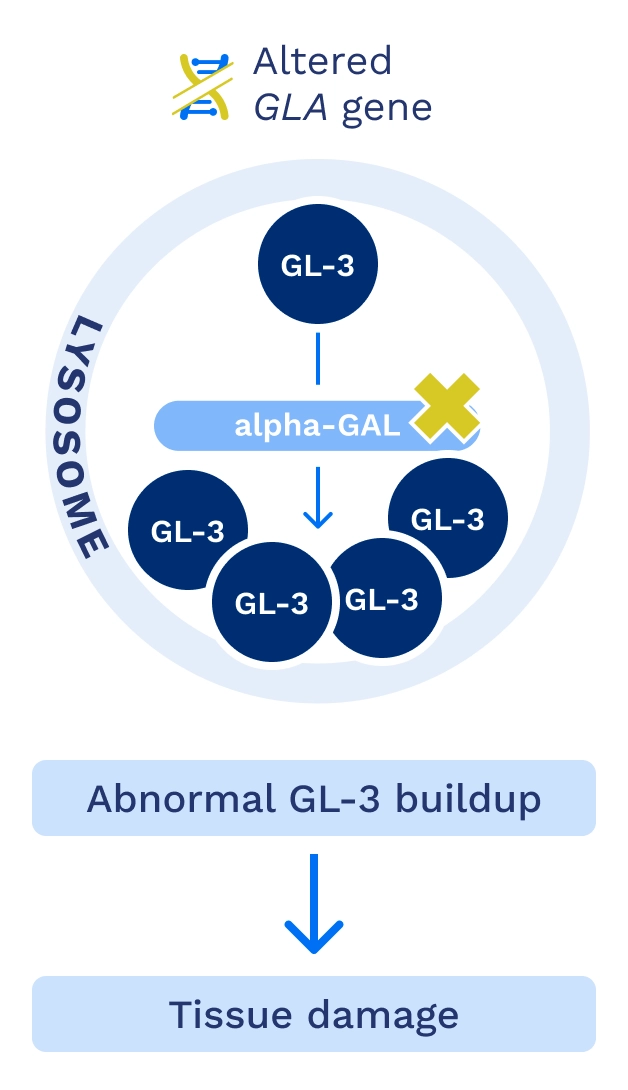
- Fabry disease is caused by alterations in the GLA gene, which produces an enzyme called alpha-galactosidase A (or alpha-GAL)
- Alpha-GAL is responsible for clearing a fatty substance called GL-3 (or globotriaosylceramide) from tissues and organs
- In Fabry disease, because there is reduced production of functional alpha-GAL enzyme, GL-3 builds up within the lysosomes
- GL-3 build-up begins before birth and continues for decades
- This can lead to damage in tissues and organs throughout the body. Tissue and organ damage can lead to serious complications over time
Someone living with Fabry disease may experience silent symptoms or subtle signs and symptoms for a long time. It can also happen that, without warning, sudden complications can arise from symptoms (such as a stroke, heart problems, or kidney disease).4 These are reasons why it’s very important for patients to be diagnosed early, and to work with a multi-disciplinary care team to treat and manage Fabry disease.
What are common symptoms of Fabry disease?
Symptoms of Fabry disease can vary widely – even from one family member to another. One person might experience only one symptom of Fabry disease, while someone else may experience many symptoms. How severe a symptom is can also vary widely. Fabry disease is commonly misdiagnosed or undiagnosed because the same symptoms can occur in other, more well-known conditions.4-6
Read more about what parts of the body can show symptoms* of classic Fabry disease.
Occasional episodes of intense, burning pain can occur that usually start in the hands and feet, and often spread to other parts of the body.
When this type of episodic pain becomes severe and debilitating, it is referred to as a “Fabry crisis”. Fabry crises can persist for several days or longer and may require special intervention to manage pain. Pain may also be exacerbated when you have a fever.
Episodic pain can be brought on by:
- Changes in weather
- Exposure to hot temperatures
- Stress
- Exercise, and/or fatigue
People with Fabry disease may experience chronic neuropathic pain; a burning, tingling pain that mainly affects the palms of the hands and soles of the feet.
Some people experience this type of pain every day, while others experience it less often.
Neuropathic pain is one of the most common symptoms of Fabry disease and is often the first symptom that brings children and adolescents to their pediatricians.
Hearing loss and tinnitus (ringing in the ears) are common early symptoms reported in classic Fabry disease.
In addition to physical symptoms, individuals with classic Fabry disease may also have depression and anxiety.
Worry, anger, grief, and guilt related to passing the condition on to family are common emotions.
While it is easy to become frustrated and discouraged, consider talking to your doctor and family about how you feel.
To help you cope with these feelings, there are support groups available for people with Fabry disease.
Over time, excess GL-3 accumulation can thicken small blood vessels in the brain. As a result, individuals may experience cerebrovascular symptoms such as:
- Headache
- Dizziness/vertigo
- Stroke/transient ischemic attacks (TIAs)
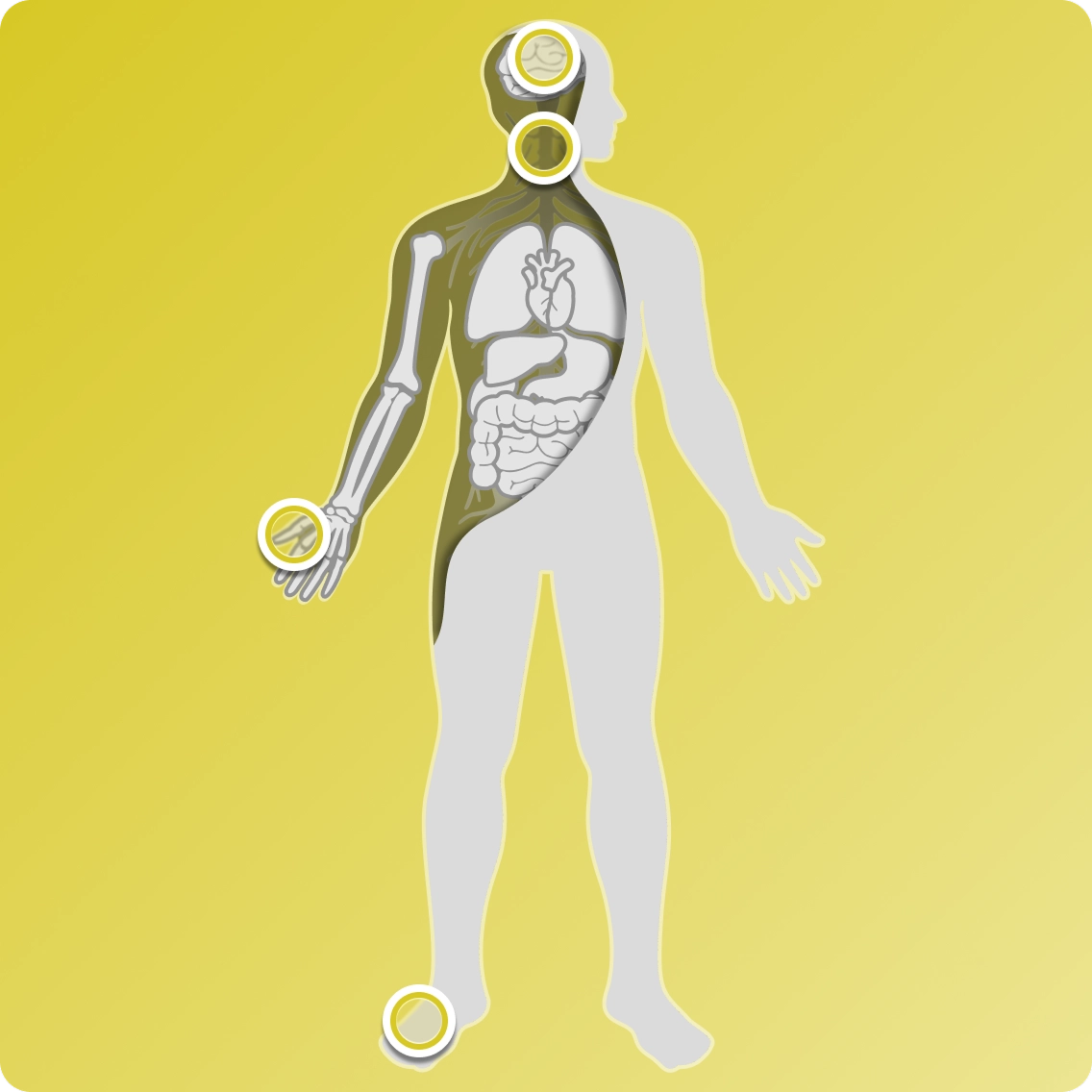
Although the causes of fatigue in Fabry disease are not well understood, it is a common symptom of the condition.
Some people with Fabry disease are unable to tolerate physical exertion and may tire or become overheated even after mild activity.
Physical exertion can also trigger episodes of pain. Lifestyle modifications may be used to help reduce these episodes.
Many people with classic Fabry disease either perspire very little (hypohidrosis) or not at all (anhidrosis).
This can cause overheating, frequent fevers, and sensitivity to extremes in temperature.
Impaired sweating is generally caused by damage to the nerves and sweat glands.
Impaired sweating, along with pain in the hands and feet, is often one of the earliest signs of Fabry disease in childhood.
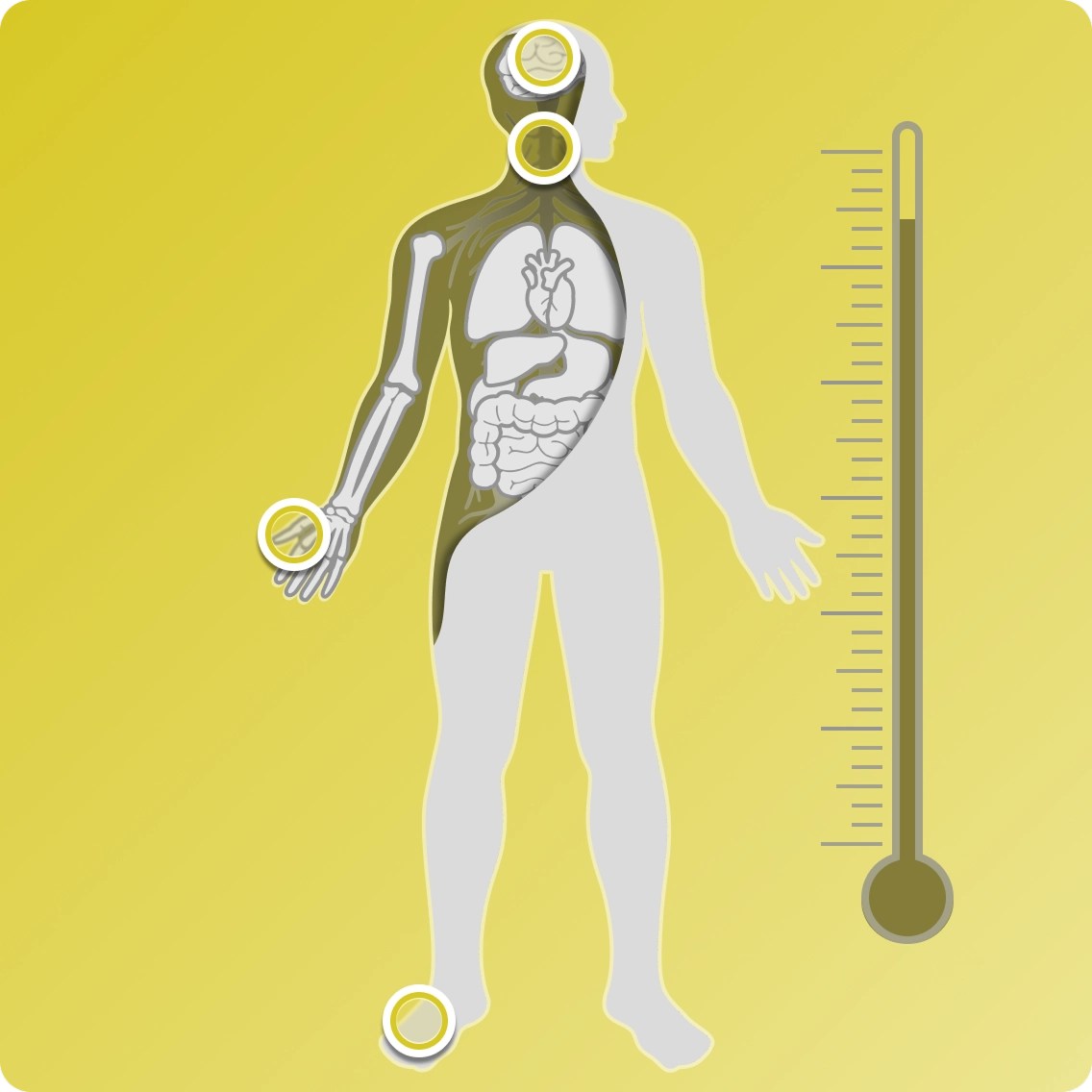
Temperature sensitivity is common in classic Fabry disease.
It presumably results from lipid deposition in small vessel walls, perineural cells, and unmyelinated or myelinated nerve cells resulting in small fiber neuropathy.
People with classic Fabry disease can experience recurrent fever, even in the absence of an acute illness (example cold, infection or flu). Recurrent fevers are often accompanied by neuropathic pain.
One of the most visible signs of classic Fabry disease is a reddish-purplish skin lesion called an angiokeratoma.
This sign is characteristic of the condition and may lead doctors to suspect Fabry disease. Angiokeratomas are most commonly located between the navel and the knees, sometimes called “bathing trunk distribution”.
Angiokeratomas usually appear early in life and can become larger and more numerous with age.
Another common sign of classic Fabry disease is corneal whorling, a distinctive starburst pattern on the cornea of the eye that typically does not affect vision.
Most males and females with classic Fabry disease have corneal whorling. Corneal whorling can only be seen through a slit-lamp ophthalmoscopy exam. If your eye doctor notices corneal whorling, you should get tested for Fabry disease.
Many people with Fabry disease experience chronic stomach problems, which can range from mild to severe.
These disturbances may include pain after eating a meal, diarrhea, constipation, vomiting and nausea.
Fabry can cause premature cardiac problems that can begin even in young adults. As GL-3 accumulates over many years, progressive damage can occur to the tissues of the heart, as well as to the blood vessels that supply the heart.
Heart problems due to Fabry disease may include:
- Thickening (hypertrophy) of the muscle wall of the heart’s left chamber (ventricle)
- Heart valve disease
- Irregular heartbeat (arrhythmias)
- Cardiac fibrosis
- Heart failure
After years of GL-3 buildup, problems with the kidneys can develop, and kidney function may become compromised. Kidney damage begins early, even in childhood. Damage at this stage is 'silent' meaning there are no signs or symptoms until adulthood when the kidneys can stop functioning properly (kidney insufficiency) or may fail (kidney failure). Thus, GL-3 accumulation in the kidneys represents a major health risk for those with Fabry disease. However, kidney problems are not unique to Fabry disease.
Often, it is other signs and symptoms (like pain and angiokeratomas) that may lead a doctor to suspect Fabry disease.
Signs of kidney problems may include:
- Microalbuminuria (excess albumin in urine, detected by a urine test)
- Proteinuria (protein in urine, detected by a urine test)
- Chronic kidney disease
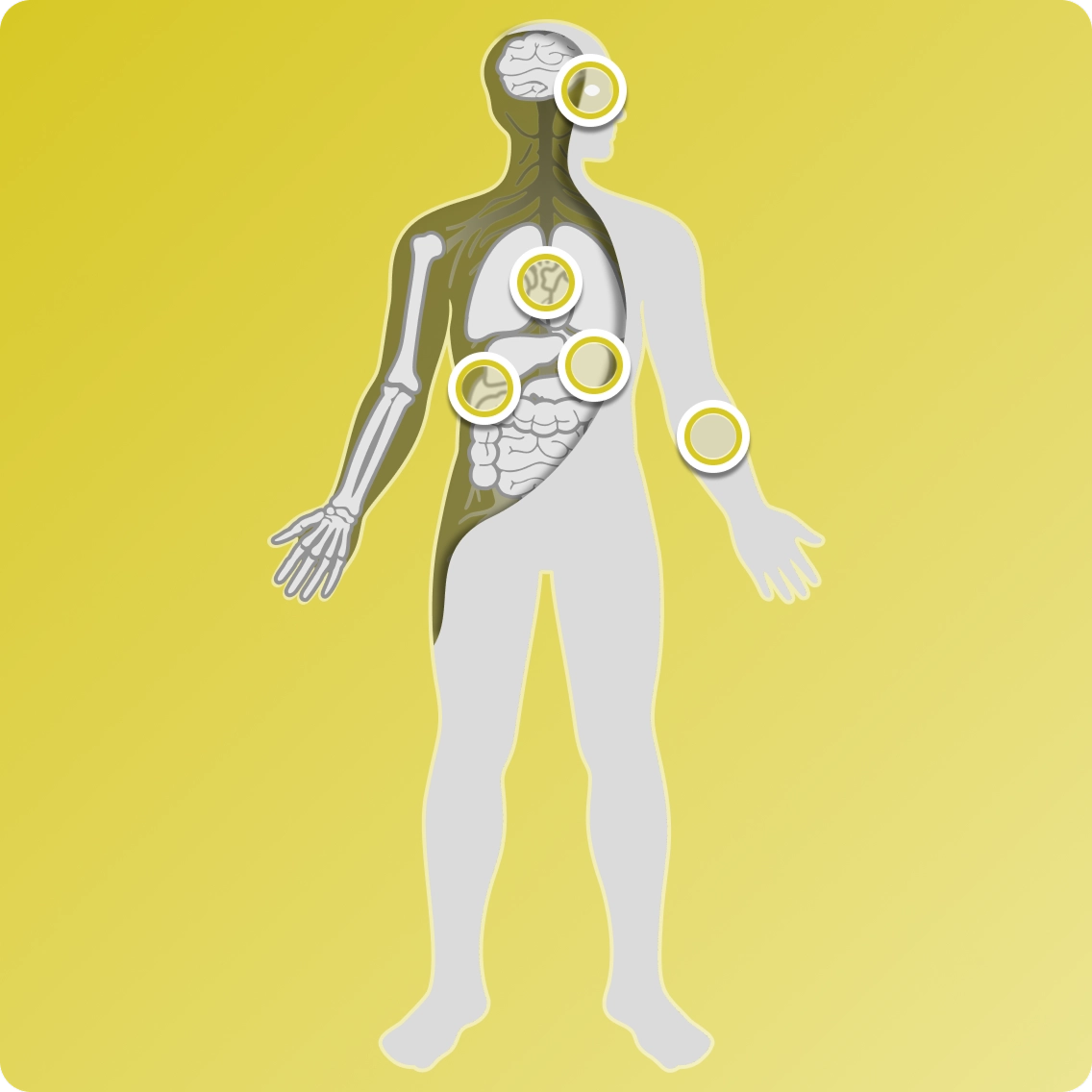
*This is not a complete list of all Fabry symptoms. Only a doctor can diagnose Fabry disease. If you or a family member have concerns about any of these symptoms, be sure to contact your doctor.

Fabry disease and pain
Pain is a common symptom with Fabry disease. People with Fabry disease can experience different kinds of pain for different reasons. With Fabry disease, people can experience such neuropathic pain as painful sensations in the hands and feet, gastrointestinal pain (pain in the stomach), chest pain, migraines or headaches, and sensory issues such as heat or cold intolerance.6
Generally, Fabry-specific pain is categorized in a few different ways6,7
- Nerve pain: burning, tingling, or shooting pain, often in the hands and feet (including fingertips, toes, and palm of the hand or soles of the feet). This type of pain is caused by nerve damage and is often one of the first signs of Fabry disease. Nerve damage can result in reduced sweating, which can lead to heat intolerance.
- Evoked pain and sensory abnormalities: pain from things that normally wouldn’t hurt, such as light touch or pressure, physical exercise, stress, exhaustion, a full stomach, changes in temperature, shifts in the weather or from a fever.
- Pain crises: short, intense bursts of pain that spread across the body. While these episodes come and go, they can be very painful, debilitating, and emotionally distressing.
- Chronic pain: pain that lasts over several months.
- Gastrointestinal pain: pain in the lower abdomen, which can be chronic or occur after eating alongside symptoms such as diarrhea, bloating, and quickly feeling full (early satiety).
Pain can be a very frustrating and upsetting symptom of Fabry disease. Because it is difficult to measure, it can lead to feeling misunderstood or dismissed by a health professional or even a loved one.6,7
Fabry disease symptoms progress with age
Because GL-3 buildup in the tissues begins before birth and continues over decades, Fabry disease symptoms can change — and worsen—as you age.
One of the most common early symptoms of Fabry disease is nerve pain, a severe burning or tingling pain in the hands and feet. It’s often one of the first symptoms experienced by children or teens that bring them to the doctor.6

Classic Fabry disease symptoms in children and older adults
Children and teens can also experience symptoms such as8
- Recurrent fevers
- Heat and cold intolerances
- Stomach and digestive problems
- Skin condition called angiokeratomas (small red, blue, or purple spots)
In Fabry disease, symptoms progress with age. However, even young adults are at increased risk for early stroke and other serious complications affecting the brain and heart.5,8
As adults age, they may start to experience more progressive Fabry disease. These complications can be serious and can come on quickly.5 They can include:
- Cardiac complications
- Stroke
- Kidney disease
- Nervous system issues
- Respiratory symptoms
- Depression

Fabry disease symptoms in females
Fabry disease symptoms in women and girls (biological females) can be much more variable than in men and boys (biological males). Some females with Fabry disease may remain healthy with only mild symptoms throughout their lives. However, this is not always the case. Studies have shown that approximately 69% of females with Fabry experience symptoms that may progress over time. Symptoms in females are variable but they can be severe.1
If you are interested in why women and men may experience Fabry differently, learn more about how Fabry is inherited.
Importance of early diagnosis
Symptoms of Fabry disease can be varied and affect the whole body. They can range from bursts of pain to life-threatening complications. Early diagnosis of Fabry disease is important so that you can address symptoms with a comprehensive treatment management plan. If you have a family history of Fabry disease, consider getting testing for your family as soon as possible—even in the absence of experiencing symptoms. If you'd like to learn more about testing options, talk to your doctor.
Understanding Fabry disease symptoms
CareConnect offers comprehensive disease education, from diagnosis through treatment. To get started, contact a Case Manager, Monday through Friday, 8AM-6PM ET.
Call 1-800-745-4447 (for English, press 3; para español, oprima 7) or email info@CareConnectPSS.com.

References
1 Mehta A, Hughes DA. Fabry Disease. GeneReviews® [Internet]. 1993-2025.
2 Rajkumar V, Dumpa V. Lysosomal Storage Disease. StatPearls. 2025.
3 Bokhari SRA, Zulfiqar H, Hariz A. Fabry Disease. StatPearls. StatPearls Publishing Copyright © 2025, StatPearls Publishing LLC.; 2025.
4 Ortiz A, Germain DP, Desnick RJ, et al. Fabry disease revisited: Management and treatment recommendations for adult patients. Mol Genet Metab. Apr 2018;123(4):416-427. doi:10.1016/j.ymgme.2018.02.014
5 Germain DP. Fabry disease. Orphanet J Rare Dis. Nov 22 2010;5:30. doi:10.1186/1750-1172-5-305 6 Politei JM, Bouhassira D, Germain DP, et al. Pain in Fabry Disease: Practical Recommendations for Diagnosis and Treatment. CNS Neurosci Ther. Jul 2016;22(7):568-76. doi:10.1111/cns.12542
6 Politei JM, Bouhassira D, Germain DP, et al. Pain in Fabry Disease: Practical Recommendations for Diagnosis and Treatment. CNS Neurosci Ther. Jul 2016;22(7):568-76. doi:10.1111/cns.12542
7 Burand AJ, Jr., Stucky CL. Fabry disease pain: patient and preclinical parallels. Pain. May 1 2021;162(5):1305-1321. doi:10.1097/j.pain.0000000000002152
8 Salviati A, Burlina AP, Borsini W. Nervous system and Fabry disease, from symptoms to diagnosis: damage evaluation and follow-up in adult patients, enzyme replacement, and support therapy. Neurol Sci. Jun 2010;31(3):299-306. doi:10.1007/s10072-009-0211-y
Sanofi does not provide medical advice, diagnosis, or treatment. The health information contained herein is provided for general educational purposes only. Your healthcare professional is the best source of information regarding your health. Please consult your healthcare professional if you have any questions about your health or treatment.
MAT-US-2511954-v1.0-03/2026